WASHINGTON D.C. / CAIRO – In a move that has sent ripples through military and diplomatic circles, the United States has approved the sale of the sophisticated National Advanced Surface-to-Air Missile System (NASAMS) to Egypt. The deal, valued at nearly $5 billion, was announced abruptly by the U.S. State Department, catching many American military media outlets by surprise.
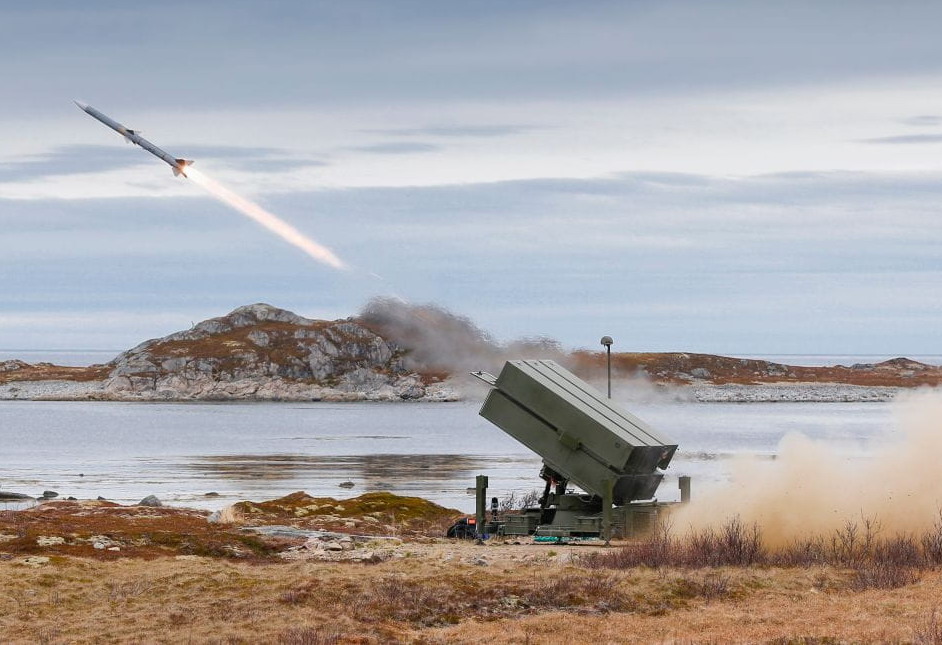
The acquisition of NASAMS marks a significant upgrade to Egypt’s air defense capabilities. The system, renowned for its formidable performance, boasts an impressive 94% interception rate in the ongoing Russia-Ukraine conflict. Its pedigree is further cemented by its role in safeguarding critical infrastructure, including the White House and the broader Washington D.C. area, underscoring its advanced and reliable nature.
Developed through a collaborative effort between the American defense giant Raytheon (now RTX) and Norway’s Kongsberg, NASAMS is a testament to cutting-edge military engineering. At its core lies the crucial Sentinel AN/MPQ-64F1 radar, capable of detecting even the most elusive drones with a range extending up to 120 kilometers. While its engagement range is 40 kilometers, the system’s ability to simultaneously engage 72 targets highlights its robust defensive capacity.
The Fire Distribution Center (FDC) serves as the central nervous system of NASAMS, orchestrating radars and missile launchers, prioritizing threats, and distributing defensive assignments with precision. A key advantage of the FDC is its interoperability, allowing seamless integration with other air defense systems, such as Germany’s IRIS-T, which Egypt already possesses. This cross-system compatibility enables the deployment of diverse missile types, enhancing the overall flexibility and lethality of Egypt’s air defense network. Furthermore, the system boasts a rapid response time, with missiles capable of launching within a mere 10 seconds of receiving a command, and is highly resistant to jamming, ensuring its reliability in contested environments.
The comprehensive deal includes a substantial arsenal of missiles: 100 AMRAAM-ER missiles, 100 AIM-120C missiles, 600 AIM-9X Sidewinder Block 2 missiles, 150 AIM-9X training missiles, 62 AIM-9X G.U.S. (guidance units) missiles, and 20 CATM G.U.S. guidance units.
The strategic implications of this NASAMS deal are multifaceted and extend far beyond a simple arms transaction.
One primary objective for the U.S. appears to be to deter Egypt from pursuing Chinese J-10C fighter jets. These Chinese aircraft offer capabilities comparable to the F-16 but come equipped with advanced PL-15 missiles, a long-range capability that Egypt has been keen to acquire. By providing the AIM-120C missiles as part of the NASAMS package, the U.S. is offering a compelling alternative to Egypt’s desire for extended-range missile capabilities, effectively countering China’s growing influence in the region’s arms market.
Moreover, the deal signals a significant recalibration in U.S.-Egypt relations. Historically, the U.S. has been hesitant to provide Egypt with advanced missiles like the AMRAAM, thereby limiting the full potential of its F-16 fleet. This latest move is widely interpreted as a “token of affection” from the U.S., aimed at bolstering ties and counteracting Egypt’s increasingly diversified military cooperation, particularly with China.
From Washington’s vantage point, the approval of such a sophisticated defense system suggests a lack of immediate concern regarding a potential conflict between Egypt and Israel. This underscores a perceived stability in the bilateral relationship, allowing for the transfer of advanced weaponry without raising alarms about regional security dynamics.
Looking eastward, the NASAMS system could prove pivotal for Egypt in any potential confrontation with Ethiopia. Ethiopia’s burgeoning drone capabilities, some of which are reportedly supplied by Iran and Turkey, pose a growing threat that NASAMS is well-equipped to neutralize.
However, the deal may also have implications for U.S. military aid to Egypt. There is speculation that the U.S. might reduce direct financial assistance, arguing that since Egypt is now capable of purchasing such advanced weaponry, the need for extensive aid may diminish.
This “serpentine deal,” as some analysts have termed it, due to its timing and far-reaching implications, will undoubtedly shape Egypt’s military and foreign policy in the coming years. Its ultimate impact on regional power dynamics remains to be seen.