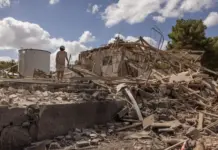
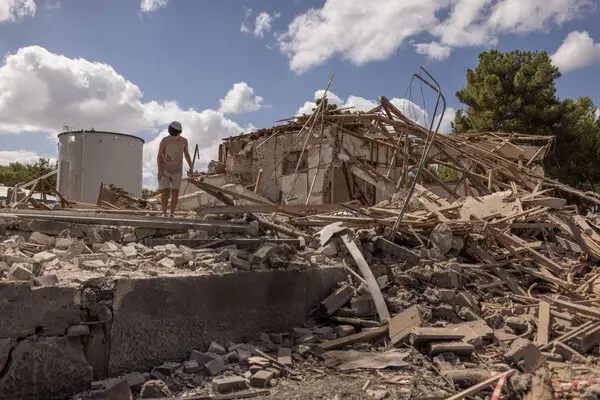
Tehran, Iran – A wave of inexplicable explosions and incidents has swept across Iran, striking residential buildings, a shoe factory, and critical gas refineries. While Iranian authorities attribute these events to mundane causes like gas leaks, a deeper, more unsettling narrative is emerging, pointing towards an intensifying covert war.
Sources suggest that these incidents are not accidental, but rather a calculated campaign, with fingers pointing directly at the Israeli Mossad. A recent report in The New York Times indicates that these explosions are the work of Israeli operatives. Key figures within Iran’s Revolutionary Guard reportedly concur, believing the Mossad is executing its vowed continuation of operations within Iranian borders following recent regional conflicts.
The alleged Mossad tactics are chillingly precise. Operatives are reportedly setting fires in rented apartments, particularly in inexpensive neighborhoods or near military installations, then meticulously destroying evidence as they depart. The explosions at a shoe factory and instances of burning vehicles are also being linked to Mossad activities, potentially targeting drone manufacturing facilities or serving as a means to erase tracks during pursuits.
The Iranian government finds itself in a precarious position, reportedly downplaying these occurrences to avert public retaliation against Israel. Such a response would inevitably necessitate a direct military confrontation, a prospect Tehran appears eager to avoid. However, public sentiment within Iran, particularly on social media, reveals a widespread, sardonic awareness that the Mossad is likely behind these destabilizing events.
Since June 25, the nation has endured over two dozen explosions, resulting in at least 30 casualties. A significant majority of these incidents have occurred in close proximity to sensitive military, security, or administrative sites, underscoring the strategic nature of the attacks.
Beyond the explosions, the covert campaign appears to extend to targeted assassinations and infrastructure strikes. The demise of Iranian General Gholam Hossein Gheybparvar, officially attributed to war injuries, is now being scrutinized as a potential Mossad assassination following the recent 12-day conflict. Furthermore, reports indicate ongoing Israeli assaults on Iranian oil and gas wells and vital ports, aiming to cripple the nation’s export capabilities.
In response, Iran is reportedly redoubling its efforts to re-arm allied militias, particularly the Houthis, with the aim of striking back at Israel. Recent interceptions, such as the US Navy seizing a fishing boat laden with ammunition destined for Houthi forces, highlight the scale of these resupply operations. Houthi attacks have already demonstrated their capacity to impact Israeli infrastructure, exemplified by the temporary closure of Ben Gurion Airport and financial duress experienced by the Port of Eilat.
Compounding Iran’s security woes are severe economic challenges. The nation grapples with a staggering 42% inflation rate, diminished oil export capacity due to infrastructure attacks, and a dire drought that has led to critical water and electricity shortages. These mounting economic pressures are widely seen as a significant factor pushing Iran towards the negotiating table.
Adding to the pressure, European nations are contemplating the re-imposition of sanctions on Iran by the close of August, should Tehran fail to recommit to the nuclear agreement. This prospect is viewed as an impending “catastrophe” for Iran, with the potential to ignite further internal unrest.
The covert war between Iran and Israel continues unabated. Israel’s strategy appears focused on destabilizing the Iranian regime through a combination of economic pressure and clandestine operations. Facing formidable internal challenges, Iran may be compelled to seek closer diplomatic and economic ties with its Gulf neighbors in the turbulent months ahead.