CAIRO, Egypt – In a powerful assertion of its national sovereignty, Egypt has communicated to the United States that it will not compromise on two critical issues: the Grand Ethiopian Renaissance Dam (GERD) and the potential displacement of Palestinians from Gaza into the Sinai Peninsula. This declaration, reported by the Al-araby Al-Jadeed newspaper, underscores Egypt’s unwavering stance on matters it considers “red lines,” and comes amid a flurry of diplomatic and military maneuvers across the Middle East.
Cairo’s Unyielding Position
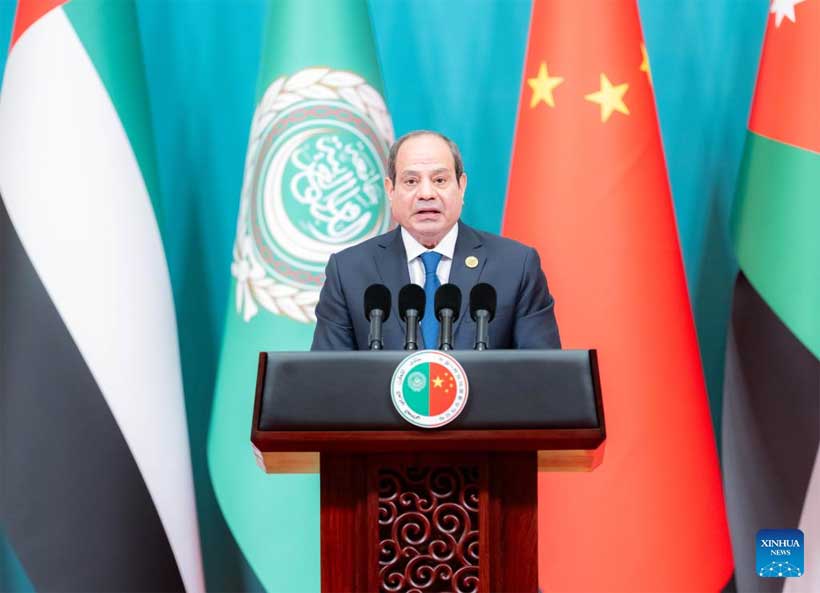
The Egyptian government’s firm message was delivered following a high-level meeting between the head of U.S. Central Command, Egyptian President Abdel Fattah el-Sisi, and the Minister of Defense. The discussions, which centered on the GERD, prompted Cairo to proactively state its non-negotiable position, making it clear that any attempt to link the dam’s resolution to the acceptance of displaced Palestinians would be rejected.
This resolute stance is further bolstered by concerns in Ethiopia over recent statements made by President Donald Trump regarding the GERD. An Ethiopian analyst expressed alarm at Trump’s remarks, viewing them as a direct threat to Ethiopia’s national security. Trump had highlighted the significant U.S. financial contribution to the dam and its profound impact on the Nile’s water flow to Egypt, suggesting a more aggressive U.S. posture on the issue.
Gaza on the Brink
The situation in the Gaza Strip remains precarious, with stalled negotiations in Doha and a deteriorating humanitarian crisis. Talks have hit an impasse on key issues, including a complete Israeli withdrawal, the delivery of humanitarian aid, and a prisoner exchange. The communication breakdown between the Hamas delegation in Doha and its leadership in Gaza has further complicated the negotiations, a situation that Israel appears to be exploiting.
In a concerning development, the Israeli military has reportedly formulated a “plan B” should the talks ultimately fail. This plan involves a military advance into Deir al-Balah, a central area of Gaza that has so far been spared from the fighting and is now densely populated with displaced Palestinians. The objective, it is believed, is to isolate Hamas leaders and prisoners thought to be in the area, utilizing aerial surveillance and targeted strikes rather than a full-scale ground invasion.
Meanwhile, the humanitarian situation in Gaza has reached catastrophic levels. Reports of widespread hunger and malnutrition are rampant, with a four-year-old child recently dying of starvation. Hospitals are reportedly overwhelmed with thousands of children suffering from severe malnutrition. The crisis was exacerbated by the bombing of a humanitarian aid warehouse that had been established by Israel, an act that has been widely condemned as a potential war crime.
In a sign of the intense diplomatic pressure, Israel has reportedly backed away from a plan to construct a “tent city” near the Egyptian border to house displaced Palestinians. This reversal came after Egypt threatened a “non-diplomatic response” to the proposal, which had been put forward by Israeli Prime Minister Benjamin Netanyahu.
A Region on Edge
The turmoil in Gaza is unfolding against a backdrop of broader regional instability. Israel is reportedly increasing its focus on its border with Syria, preparing for potential attacks from Syrian territory. This includes supporting the Druze community in Sweida as a first line of defense.
The actions of Prime Minister Netanyahu are also drawing scrutiny. Observers suggest he may be intentionally prolonging the conflict to avoid being ousted from power. His recent threat to strike Pakistan’s nuclear program has been cited as an example of his increasingly provocative behavior, which has reportedly alarmed even his allies, including Donald Trump. These actions are seen as undermining regional stability and jeopardizing diplomatic initiatives such as the Abraham Accords.