CAIRO, Egypt – Egypt is making significant strides in reshaping its foreign and military policy, fostering closer ties with global and regional powers China and Turkey. These developments, which include a landmark agreement for joint fighter jet production with Ankara and enhanced military cooperation with Beijing, signal a strategic pivot by Cairo to diversify its alliances and bolster its defense capabilities. This shift comes amid a complex geopolitical climate, marked by ongoing tensions between Turkey and Israel, and reflects a broader realignment of power in the Middle East.
Deepening Military Ties Between Cairo and Beijing
In a move that has captured the attention of international observers, Egypt is actively strengthening its military relationship with China. According to a recent report by Israel Hayom, this growing partnership is driven by Egypt’s desire to reduce its historical dependence on the United States for military hardware. The potential for a reduction in U.S. military aid to Egypt has further incentivized Cairo to explore alternative sources for its defense needs.
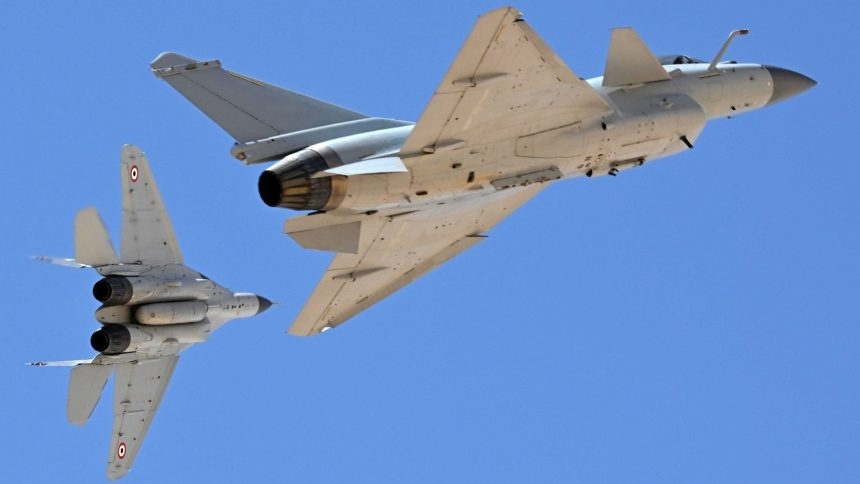
China has responded favorably to Egypt’s overtures, expressing a willingness to supply advanced weaponry and engage in joint manufacturing projects. This collaboration is expected to encompass a range of military technologies, with a particular focus on sophisticated air defense systems and the J-10CE fighter jet. The deepening of military cooperation between Egypt and China is being closely watched in the region, with reports indicating that it has raised concerns in Israel.
A Historic Defense Pact with Turkey
In a groundbreaking development, Turkey has agreed to include Egypt as a partner in the production of its fifth-generation KAAN fighter jet. This ambitious project, as detailed by Tactical Report, will see the KAAN evolve from a national Turkish enterprise into a formidable regional defense collaboration.
Egypt’s participation in the KAAN project is expected to be multifaceted, extending beyond the acquisition of the aircraft. Cairo is slated to contribute to the financing of the program, manufacture critical components, and play an active role in the jet’s development, particularly in the area of cockpit technology. A formal memorandum of understanding is expected to be signed by late 2025, following a visit by an Egyptian military delegation to inspect the prototype. This partnership represents a significant milestone in the warming of relations between Egypt and Turkey and signals a new era of strategic cooperation.
Navigating Regional Tensions
The evolving alliances in the region are set against a backdrop of heightened tensions between Turkey and Israel. Ankara has voiced strong opposition to what it perceives as Israeli efforts to partition Syria, viewing such a scenario as a direct threat to its national security. Turkish officials have indicated their readiness to intervene militarily to prevent sectarian conflict in Syria.
Conversely, Israeli officials have expressed apprehension over Turkey’s potential acquisition of the F-35 fighter jet, warning of countermeasures if the advanced aircraft is used for offensive purposes against Israel.
Embassy Incident Highlights Diplomatic Sensitivities
A recent incident at the Egyptian Embassy in the Netherlands has underscored the delicate diplomatic situation in the region. An individual identified as Anas Habib placed a lock on the embassy doors, claiming the act was a protest aimed at pressuring Egypt to open the Rafah crossing.
This action was swiftly condemned by observers, who argued that it played into the narrative, promoted by Israeli Prime Minister Benjamin Netanyahu, that Egypt is responsible for the closure of the crossing. It was pointed out that the crossing had been rendered inoperable by Israeli military action. Questions were also raised about the motives of the individual involved, citing past affiliations with a Muslim Brotherhood-linked media channel.