CAIRO – In a development that could escalate one of Africa’s most contentious geopolitical disputes, senior officials in the Egyptian military have raised the possibility of a military strike against the Grand Ethiopian Renaissance Dam (GERD) during recent meetings with the United States Army.
The discussions, held amid continued frustration over what Egypt perceives as Ethiopia’s unilateral and provocative actions on the Nile, reportedly included a range of strategic scenarios. Among them was the option of launching a targeted strike on the dam—an indication of how seriously Egypt views the threat to its water security.
While Egyptian officials have long warned that the dam poses an existential danger, this is one of the clearest signals yet that military action is being actively considered at the highest levels of Cairo’s defense establishment.
The GERD Dispute: A Flashpoint on the Nile
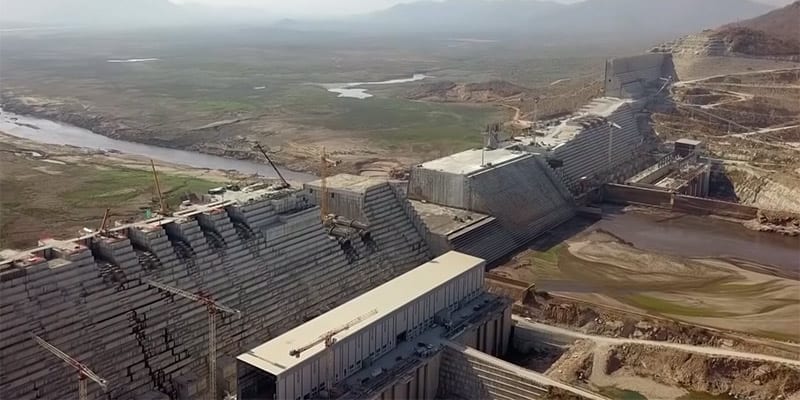
The GERD, which Ethiopia has been constructing since 2011, is Africa’s largest hydroelectric project and a source of immense national pride for Ethiopians. However, Egypt has consistently expressed alarm over the dam’s potential to disrupt the flow of the Nile River, on which it depends for more than 90 percent of its freshwater needs.
Ethiopia maintains that the project is essential for its economic development and that its operation will not cause significant harm to downstream countries. Egypt and Sudan, however, remain deeply skeptical, citing a lack of transparency and a refusal by Ethiopia to commit to a binding agreement on water management and dispute resolution.
For Egypt, the Nile is not merely a waterway—it is the lifeblood of its agriculture, economy, and population. The country’s longstanding position is that any reduction in its share of the Nile waters could lead to catastrophic consequences.
Military Scenario Discussed with U.S. Officials
According to reports from Egyptian media and regional analysts, Egyptian and U.S. military officials recently met to review regional security issues and bilateral defense cooperation. During these talks, the Egyptian side is said to have brought up the dam and explored various strategic responses, including the use of force.
While no official statement from the United States has confirmed the discussion of a potential strike, the mere inclusion of such a scenario in formal military dialogue is significant. It reflects not only Cairo’s deepening frustration with stalled negotiations but also a willingness to escalate the situation if necessary.
Egyptian officials, speaking on condition of anonymity, reportedly stated that “all options remain on the table” and that the country cannot afford to compromise on an issue so vital to its national security.
Diplomatic Channels Near Exhaustion
Despite the stark nature of the military scenario, Egyptian leadership continues to emphasize diplomacy as the preferred course of action. President Abdel Fattah el-Sisi has repeatedly affirmed Egypt’s commitment to peaceful negotiations, but he has also warned that patience has limits.
For over a decade, Egypt, Sudan, and Ethiopia have participated in on-and-off talks brokered by the African Union and supported by various international stakeholders, including the United States and European Union. Yet, these efforts have failed to produce a binding agreement on the filling and operation of the dam.
Cairo argues that Ethiopia’s actions, particularly the unilateral filling of the dam’s reservoir, violate international norms and pose an unacceptable risk to downstream states. Ethiopian officials, for their part, contend that their actions fall within sovereign rights and are justified by the urgent need for development and energy access.
The Role of the United States and Regional Stability
The United States has long played a behind-the-scenes role in seeking to resolve the GERD dispute. Washington’s position has been to encourage dialogue, technical cooperation, and compromise among the three nations. The U.S. military maintains close defense ties with Egypt and regularly conducts joint training exercises such as the annual Bright Star operation.
The inclusion of GERD in recent strategic conversations, however, suggests that the United States is increasingly aware of the potential for conflict. Analysts believe that while the U.S. does not support military action, it may be positioning itself as a critical interlocutor capable of de-escalating tensions if diplomacy fails.
A military strike on the dam, experts warn, could have devastating consequences for the region. It would likely destabilize not only Ethiopia but also neighboring Sudan, potentially triggering floods, displacements, and even broader armed conflict in the Horn of Africa. Such an outcome would be a severe setback to African development and international security efforts.
A War Over Water?
The idea of going to war over water may seem extreme, but in the context of the Nile, it is not new. Former Egyptian leaders have alluded to the possibility in the past, and military planners in Cairo have reportedly simulated various scenarios involving the dam.
The stakes are enormous. Egypt’s population of over 100 million people continues to grow rapidly, increasing the strain on an already scarce water supply. Climate change, mismanagement, and urban expansion have compounded the crisis. Against this backdrop, the GERD is viewed not just as a challenge—but as a direct threat to survival.
What Happens Next?
While the prospect of a military strike remains remote for now, its open discussion reveals a deepening sense of urgency in Egypt. With the rainy season underway and Ethiopia expected to continue filling the dam, pressure on Cairo to respond—politically, legally, or otherwise—is mounting.
Observers expect Egypt to ramp up diplomatic efforts, possibly turning to the United Nations, the African Union, or even the International Court of Justice. Meanwhile, behind closed doors, military planners are undoubtedly refining their contingency strategies.
For the people of Egypt, the message is clear: the Nile is not negotiable.
Editor’s Note:
The situation surrounding the Grand Ethiopian Renaissance Dam remains one of the most complex and consequential disputes in Africa. As diplomatic efforts stall and military considerations enter the conversation, the international community faces increasing pressure to help mediate a solution that avoids conflict and ensures sustainable development for all Nile Basin countries.